Storm Damage Cleanup: What to Do After the Wind Drops
Assessing the Aftermath Without Adding Risk
When a severe storm passes through north Georgia, the immediate aftermath can feel overwhelming. Trees that stood for decades may be split, leaning, or lying across driveways, roofs, and power lines. The instinct to start clearing debris right away is strong, but safety must come first. Downed trees often hide tension in branches and trunks that can shift without warning. Before you pick up a chainsaw or call for help, take a moment to look at the situation with a clear head.
The most dangerous trees after a storm are not always the ones already on the ground. A partially uprooted tree that is still standing, or a large limb wedged in another tree, holds tremendous stored energy. Arborists call this a “hang-up" or a “spring pole." Disturbing it can release that energy in a split second. For that reason, professional storm damage cleanup begins with a hazard assessment from a safe distance. If power lines are involved, stay at least thirty feet away and contact the utility company first. Everything else can wait until a qualified crew can evaluate the scene.
Common Types of Storm Damage in Residential Properties
Storms do not treat every tree the same. Wind direction, soil saturation, and the health of the tree all play a role in what kind of damage occurs. Understanding the pattern helps you know what to expect and what kind of help you need.
Uprooted Trees
When the ground is soaked from heavy rain, root systems lose their grip. A strong gust can push a tree over entirely, exposing the root plate. This type of damage is more common in shallow-rooted species like silver maples or in trees growing in compacted soil near driveways and foundations. Uprooted trees often bring a large mass of soil with them, which can damage underground utilities and lawn irrigation systems.
Broken Trunks and Split Leaders
Some trees snap rather than fall whole. A trunk may break fifteen or twenty feet above the ground, leaving a jagged stub that is unstable. Multiple-stemmed trees, such as some ornamental pears or Bradford pears, are prone to splitting at the crotch. These partial failures can leave heavy sections hanging in the canopy, a condition that requires careful rigging to bring down safely.
Hanging Limbs and Debris in the Canopy
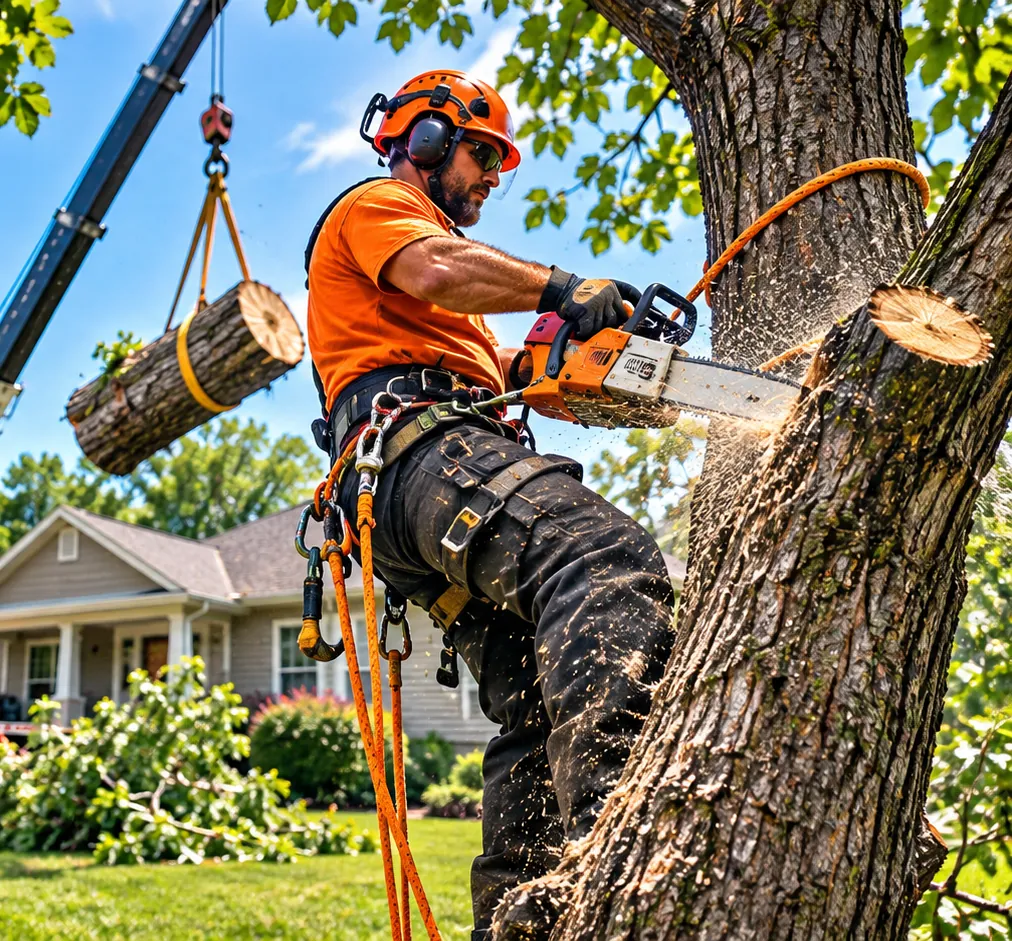
Even a tree that remains standing may have broken limbs caught in its branches. These “widow makers" can fall hours or days after the storm passes, especially as the wind continues to blow or as temperatures change. A thorough storm damage cleanup includes inspecting the entire canopy, not just the parts that are obviously broken.
Prioritizing What Gets Cleaned First
Not every fallen branch needs to be removed immediately. A practical approach is to triage the damage into three categories: immediate hazards, access obstacles, and deferred cleanup. Immediate hazards include trees or limbs resting on a structure, blocking a driveway used by emergency vehicles, or threatening a power line. Those need professional attention right away.
Access obstacles are trees that block a road, a walkway, or a path to a utility meter or propane tank. These may require partial removal to restore access, with the rest of the cleanup scheduled later. Deferred cleanup covers everything else: scattered branches, limb debris, and trees that have fallen in open areas away from structures. These can be handled over the following days or weeks as time and resources allow.
A common mistake is rushing to remove a tree that has fallen into a neighbor's yard or across a property line. In these cases, communication with the neighbor and a discussion with your insurance provider are smart steps before any work begins. The legal ownership of the tree and responsibility for removal can be complicated after a storm.
When to Call a Professional for Storm Damage Cleanup
There are times when a homeowner can safely handle small branches and debris on the ground. But storm damage cleanup often involves work that is beyond the reach of a ladder or the power of a homeowner-grade chainsaw. Any time a tree or limb is under tension, suspended above the ground, or near a structure, the risk of injury or property damage goes up sharply.
Professional tree care companies carry insurance, use specialized rigging equipment, and have crews trained to work in hazardous conditions. They can also handle the logistics of cutting large trunks into manageable pieces and hauling them away. Trying to remove a large downed tree without the right gear can lead to damaged landscaping, injured people, or a situation that costs more to fix later.
One important point: not all tree services are equal when it comes to storm response. Some companies do not offer emergency services or may be booked solid for days after a regional storm. Local providers who understand the area's tree species and typical storm patterns can often respond faster and more effectively.
For residents in Jasper and Pickens County, Georgia, a local option for storm damage cleanup is Jasper Tree Removal. Their team is familiar with the common tree species in the region and the types of damage that occur in north Georgia storms. Having a trusted local contact before a storm hits can save time and stress when every minute counts.
What to Expect During Professional Cleanup
When a crew arrives, they will start with a walkaround to assess the scene. They will look at the lean of the tree, the condition of the root system if exposed, and any obstacles like fences, gardens, or structures. They will also check for nearby power lines and note the location of underground utilities if digging is needed.
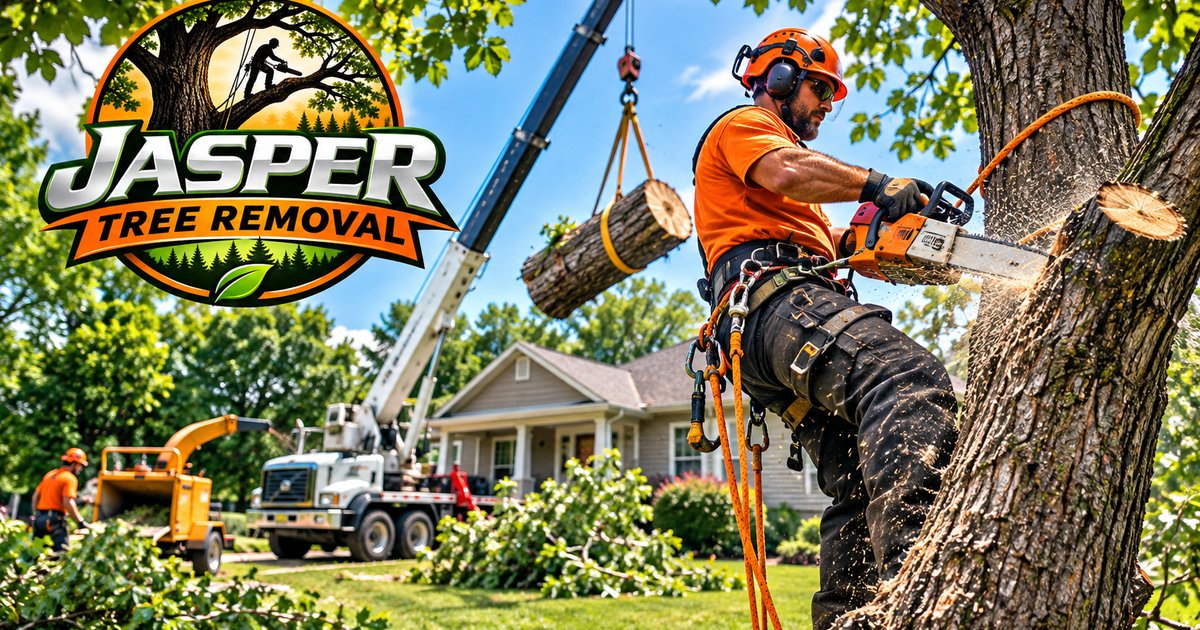
Once the plan is set, the work begins. Large trees are often removed in sections. The crew uses ropes and pulleys to lower heavy limbs to the ground rather than letting them fall freely. This technique, called rigging, protects the property below. After the tree is down, the crew cuts the trunk and branches into pieces that can be loaded onto a truck. Stump grinding may be offered separately if the homeowner wants the stump removed as well.
Cleanup after a storm is not just about removing the fallen tree. It also involves raking up smaller debris, hauling away brush, and leaving the property in a condition that is safe and usable. Some companies include this in their standard service; others charge extra. It is worth asking upfront what is included so there are no surprises.
Preparing for the Next Storm
After the cleanup is finished, many homeowners start thinking about prevention. A tree that has already lost large limbs may be structurally weaker. An arborist can assess whether the tree is likely to recover or whether removal is the safer long-term choice. Trees with decay, cavities, or poor branch attachments are more likely to fail in a storm. Regular pruning and health inspections can reduce the risk.
For properties with many large trees, an annual inspection by a certified arborist can identify hazards before a storm turns them into emergencies. This is especially important in areas like north Georgia, where storms can come up quickly and bring heavy winds and rain. Jasper Tree Removal offers these evaluations as part of their routine services, helping homeowners plan ahead rather than react after the fact.
Storm damage cleanup is never a pleasant task, but approaching it methodically makes it manageable. Assess the danger first, prioritize what needs immediate attention, and know when to bring in professionals. With the right approach, a property can be restored safely and efficiently, and the lessons learned can help prepare for whatever weather comes next.
Jasper Tree Removal on social media
 Twitter
 Instagram
 YouTube